Look a little closer
See the mechanism
Heat reaches the surfaces the air can reach
Read the diagram
A heater supplies energy and a fan moves air around the cooking chamber. Air can travel around the basket and through its perforated base, reaching exposed food surfaces. Gaps between pieces leave routes for that circulation; filling them changes access without creating an even temperature everywhere.
Original basket-style functional section, not a CFD flow field or temperature map. Navy arrows show selected recirculation routes, not every local flow direction. Basket and heater geometry vary by model; no health, speed or energy comparison is encoded.
Diagram basis: Philips/Versuni: heater, fan, perforations and gaps.
The heater supplies energy; the fan moves air
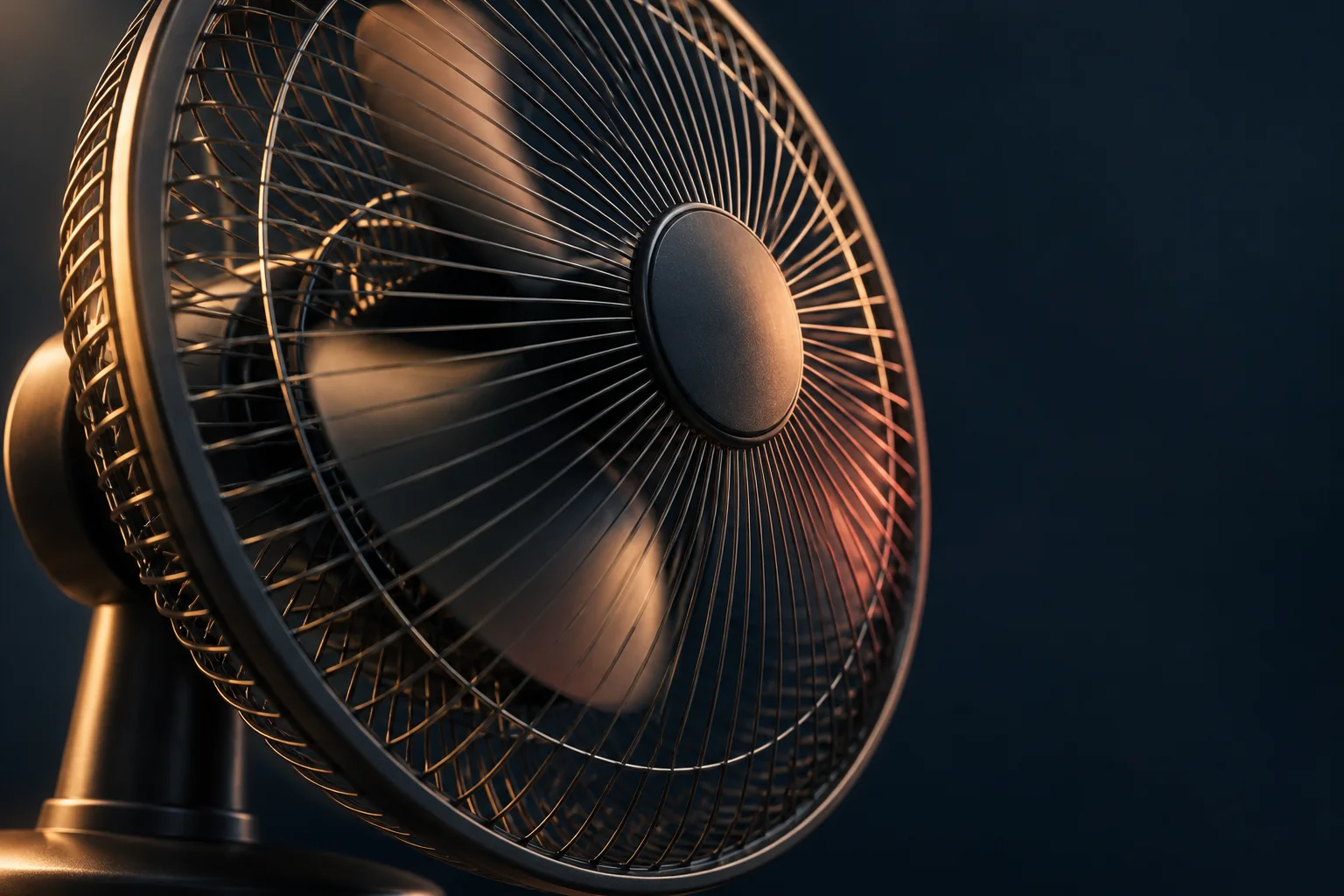
In the basket-style design described by Philips, a heating element sits above the cooking space and a fan drives hot air around it. The heater raises the air's temperature. The fan keeps replacing air at the food's surface, rather than leaving the process to still air alone.
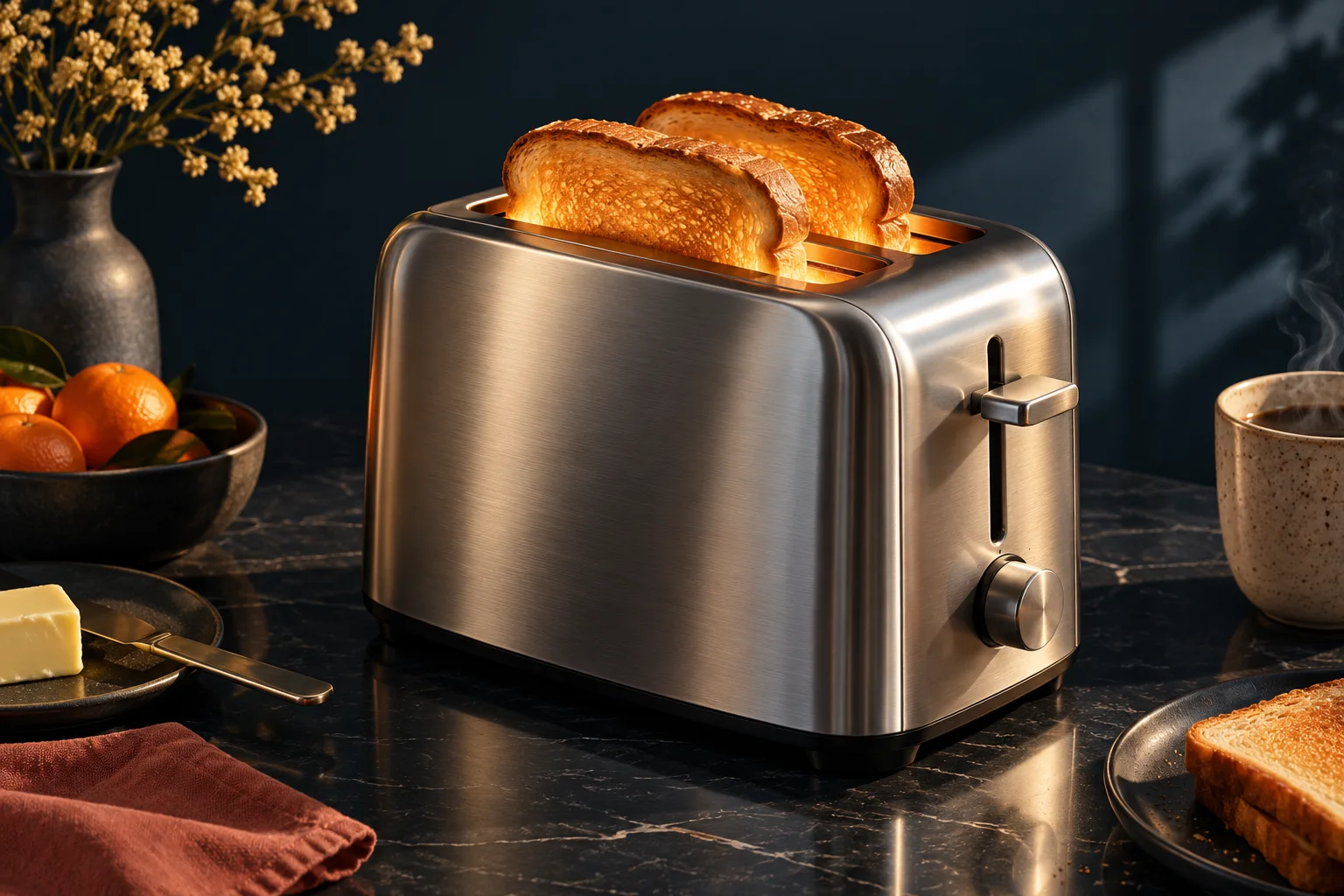
That makes an air fryer a compact convection-cooking appliance. A toaster also has an electric heating element, but its exposed glowing elements make radiant heating especially visible. An air fryer's basket, chamber and fan are arranged to make a strong circulating flow useful around a load of food.
A solid pile blocks the route
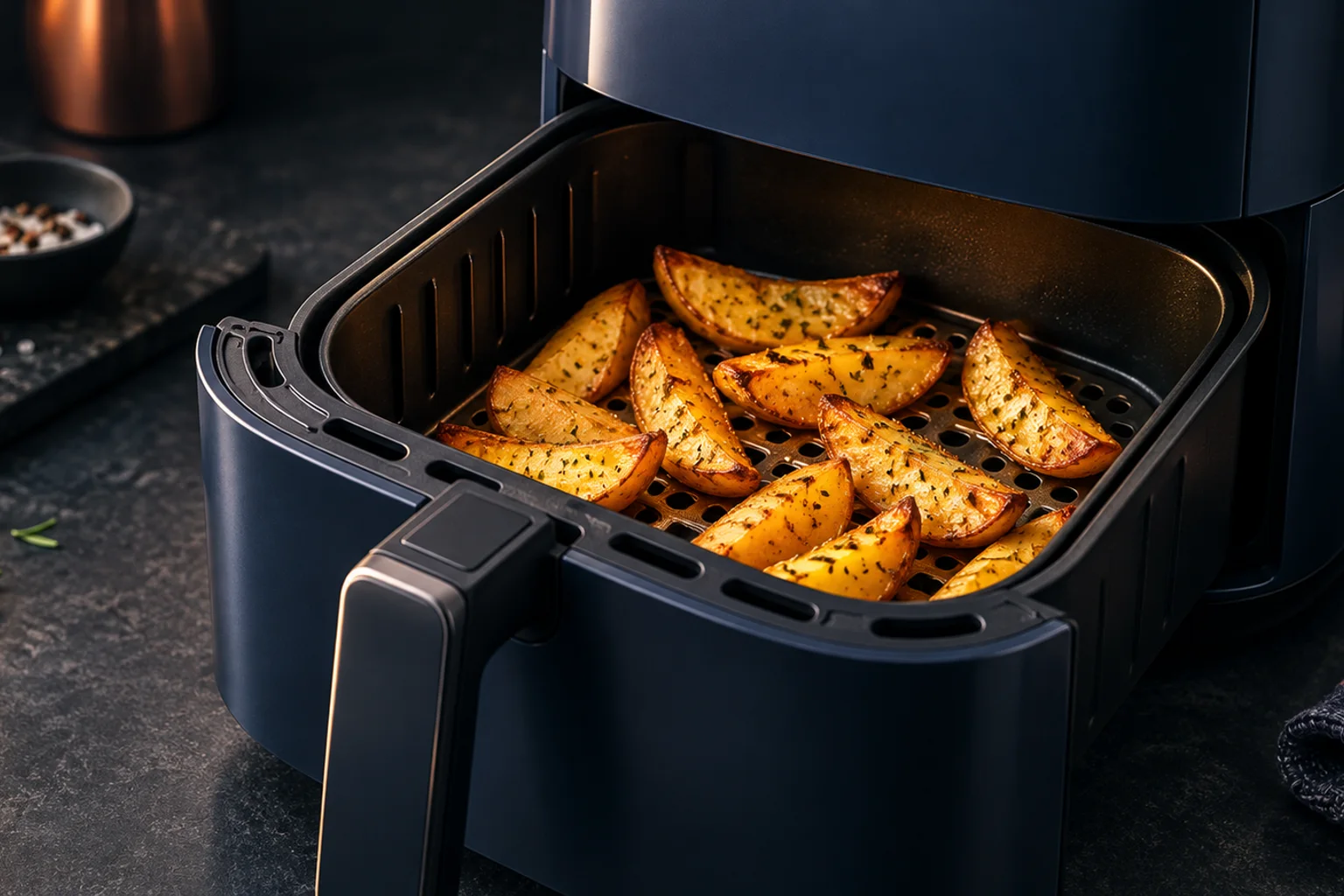
The basket supports the food without being a sealed container. Its perforations give air a route through and around the load. Philips also uses shaped chamber floors in some designs to guide circulation; that particular shape isn't required in every appliance sold as an air fryer.
Pieces pressed tightly together hide surfaces from that flow. The manufacturer's advice to leave gaps is therefore tied to the mechanism, not just the appearance of a serving suggestion. A powerful fan can't send air through the solid contact between two pieces of food.
The surface changes before the whole piece is dry
Hot airflow brings energy to the outside and moves moisture away from it. As the surface dries and heats, it can develop the browned, firmer texture associated with roasting. That doesn't mean the whole piece must lose its water: the surface and interior experience different conditions during cooking.
The name can make the appliance sound like a deep fryer with its oil missing. Its heat-transfer route is different. An air fryer circulates hot gas around exposed surfaces; a deep fryer surrounds food with hot liquid oil. Oil already on the food can still affect the result, but a fan does not turn air into an oil bath.
The thing to remember
The important combination is heat, circulation and exposed surface. The holes in the basket help the hot air reach the food instead of only passing over a solid pile.
What this example leaves out
This follows a basket-style hot-air appliance. Flow arrows are qualitative, not a measured velocity field. Chamber geometry, settings and loading instructions vary; the explanation doesn't establish cooking safety, health benefits or energy savings.
Sources & further reading
Source access dates are listed below. Manufacturer descriptions and patents support the specific constructions described, not every product.
- How Does an Air Fryer Work? A Complete Guide to the Air Fryer Function ↗
Philips Domestic Appliances / Versuni India · Retrieved 2026-10-16 · Basket-style heater/fan arrangement, perforations and gaps for circulation, qualitative surface drying/browning; shaped chamber floor is model-specific.
What Is an Air Fryer?, mechanism steps1–4 and single-layer paragraph read (web lines18–46,67–69). Health, fat-reduction, time/energy claims and exact temperature examples excluded. No chemical Maillard pathway claimed from this marketing page.