Look a little closer
See the mechanism
Cooling depends on the air and the skin
Read the diagram
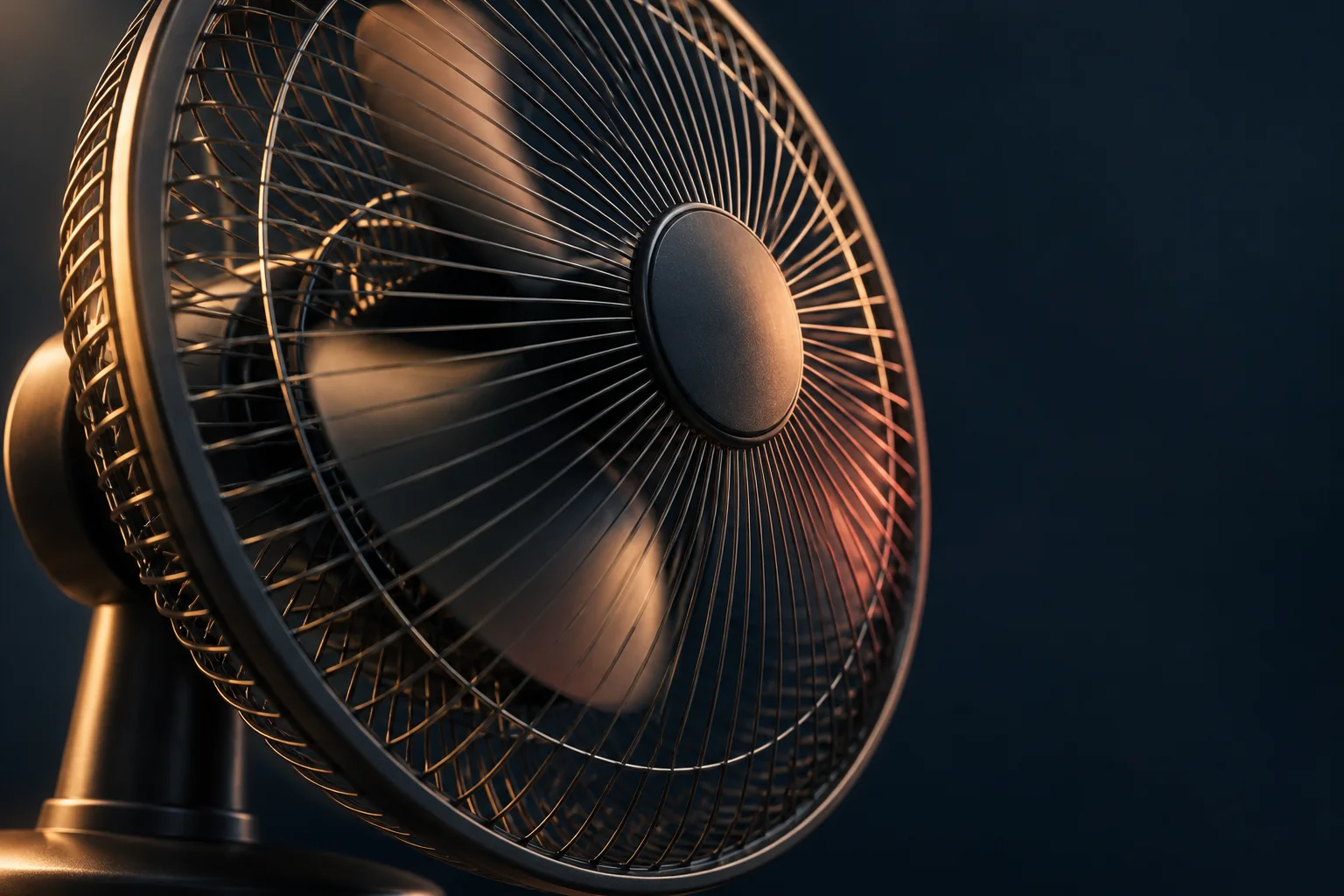
A fan moves existing air past the skin. When that air is cooler than the skin, it can carry heat away by convection. Air movement also replaces humid air beside moist skin, supporting evaporation when conditions allow. Evaporation takes energy from the skin; the fan does not create a refrigerated stream.
Qualitative skin/air diagram, not a temperature map or heat-safety recommendation. Heat-flow direction shown assumes surrounding air cooler than skin. Evaporative cooling depends on moisture and humidity. The arrows distinguish air motion, heat transfer and vapor transport; they are not measured rates.
Diagram basis: OpenStax: convection and evaporation.
Sources: OpenStax, Rice University · OpenStax, Rice University · US Department of Energy, Office of Indian Energy Policy and Programs
The air beside your skin gets replaced
When your skin is warmer than the surrounding air, it transfers heat to the air near it. A fan drives that warmed air away and brings other room air into contact with you. The replacement air doesn't have to be chilled by the fan to take more heat from your skin.
This is forced convection: bulk movement carries thermal energy away from a surface. OpenStax uses a fan blowing past a person as an example. The temperature difference matters. If the incoming air is hotter than the skin, convection isn't automatically a route for heat to leave it.
Sources: OpenStax, Rice University · OpenStax, Rice University
Moisture has another way to carry heat away
Evaporation takes energy to change liquid water into vapor. When moisture evaporates from your skin, it takes heat with it. Airflow can move humid air away from the surface so more moisture can evaporate into the passing air.
That is a different process from warming the air by contact. One moves heat through flowing air; the other moves water into the vapor phase and uses energy to do so. Humidity, available moisture and airflow affect evaporation, so the same fan setting needn't feel equally effective in different surroundings.
Sources: OpenStax, Rice University · OpenStax, Rice University · US Department of Energy, Office of Indian Energy Policy and Programs
A breeze isn't a refrigerator
The Department of Energy describes fans as moving existing air rather than generating cool air. The flow may feel cool at your skin even when a room thermometer doesn't show a fall. The sensation and the air temperature describe different parts of the exchange.
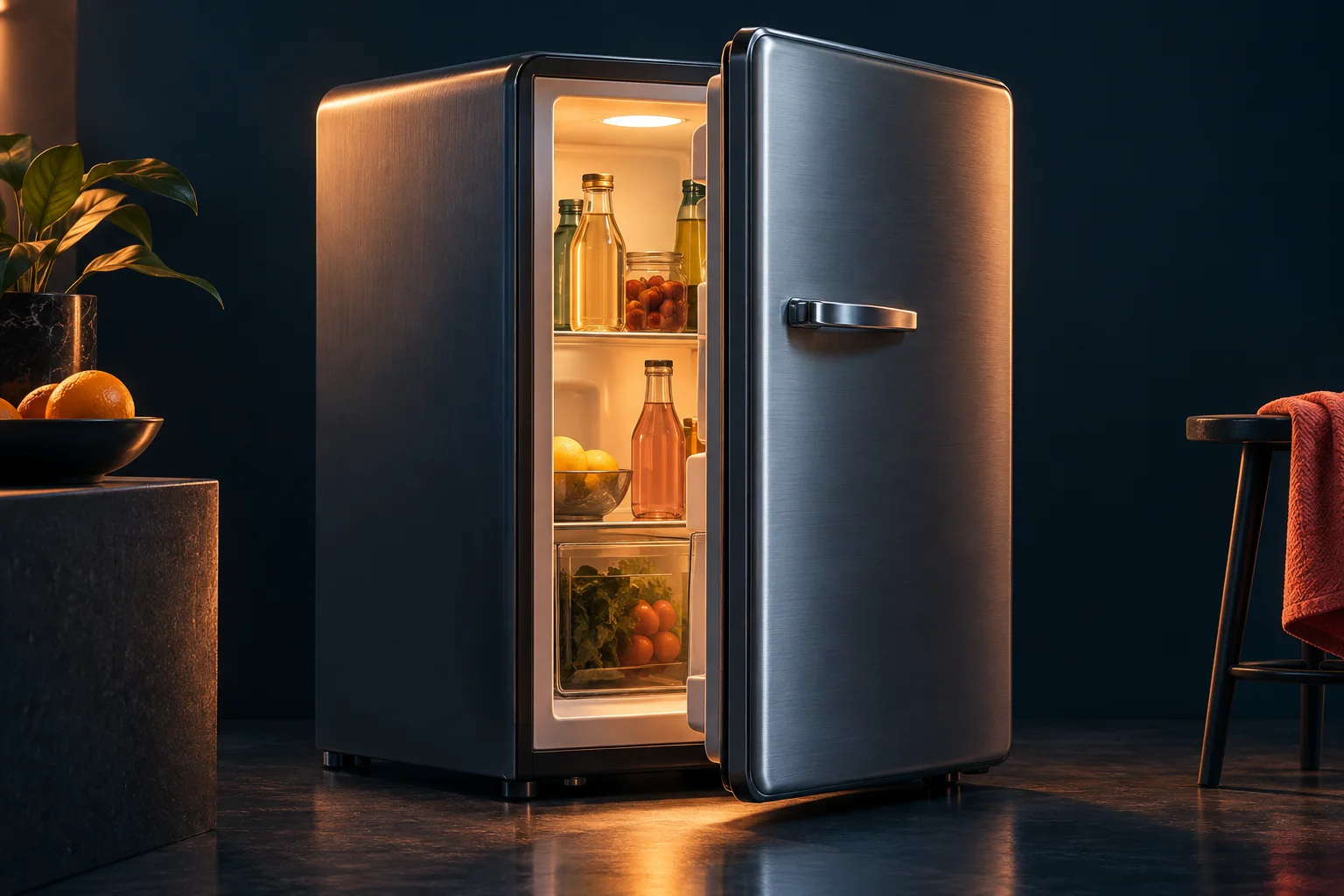
A refrigerator transfers heat through a powered cooling circuit. An ordinary desk or ceiling fan circulating indoor air has no such circuit: it changes airflow around surfaces. A fan used to exchange indoor and outdoor air has another job, and its effect depends on the air brought in. The familiar room fan explains the breeze, not every ventilation system.
Sources: US Department of Energy, Office of Indian Energy Policy and Programs · OpenStax, Rice University
The thing to remember
A fan changes the air at your skin. It can speed heat loss and evaporation without making that air colder first.
What this example leaves out
This is a qualitative explanation of an ordinary circulating fan. Convective heat-flow direction depends on temperature; evaporation depends on moisture and surroundings. It is not a heat-safety assessment or a claim that airflow always cools a person.
Sources & further reading
Source access dates are listed below. Manufacturer descriptions and patents support the specific constructions described, not every product.
- 14.6 Convection — College Physics 2e ↗
OpenStax, Rice University · Retrieved 2026-10-16 · Air movement carries heat; skin evaporation consumes heat; airflow replaces warmed/humid air; fan example with cooler surrounding air.
Convection text, evaporation paragraph and Check Your Understanding solution read. No numerical physiology, wind-chill threshold or health recommendation adopted. Convection and evaporation remain distinct. - 1.6 Mechanisms of Heat Transfer — University Physics Volume 2 ↗
OpenStax, Rice University · Retrieved 2026-10-16 · Forced convection by fans, heat-flow role of temperature and evaporation as a separate phase-change route supported by removal of humid near-skin air.
Convection section returned and read. General heat-transfer mechanism only; no universal cooling guarantee for hot/humid conditions, quantitative thermal model or room-cooling claim. - Energy-Saving Hacks To Beat the Summer Heat ↗
US Department of Energy, Office of Indian Energy Policy and Programs · Retrieved 2026-10-16 · Fans move existing air rather than generate cold air and support evaporation at skin.
Maximize Appliance Efficiency passage read. Bounded to ordinary circulation, not a universal statement about every ventilation system. No costs, climate trends or medical advice adopted.