Look a little closer
See the mechanism
Matching profiles engage along the mouth
Read the diagram steps
Profiles apart. A male profile and a receiving groove run continuously along the bag mouth. In this selected press-to-close section they are separated before pressing.
Profiles interlocked. Pressing locally deforms the profiles enough for the projecting head to enter the groove. The lips recover around it. Continuing that engagement along the mouth closes the seal.
Functional section of one continuous rib-and-groove profile, not universal bag-seal dimensions. Multiple-track and slider constructions differ. Engagement does not establish a pressure or leak rating.
Diagram basis: US5192135A: arrowhead and hook profiles.
Sources: DowBrands Inc.; US patent publication · European patent publication
Look across the strip
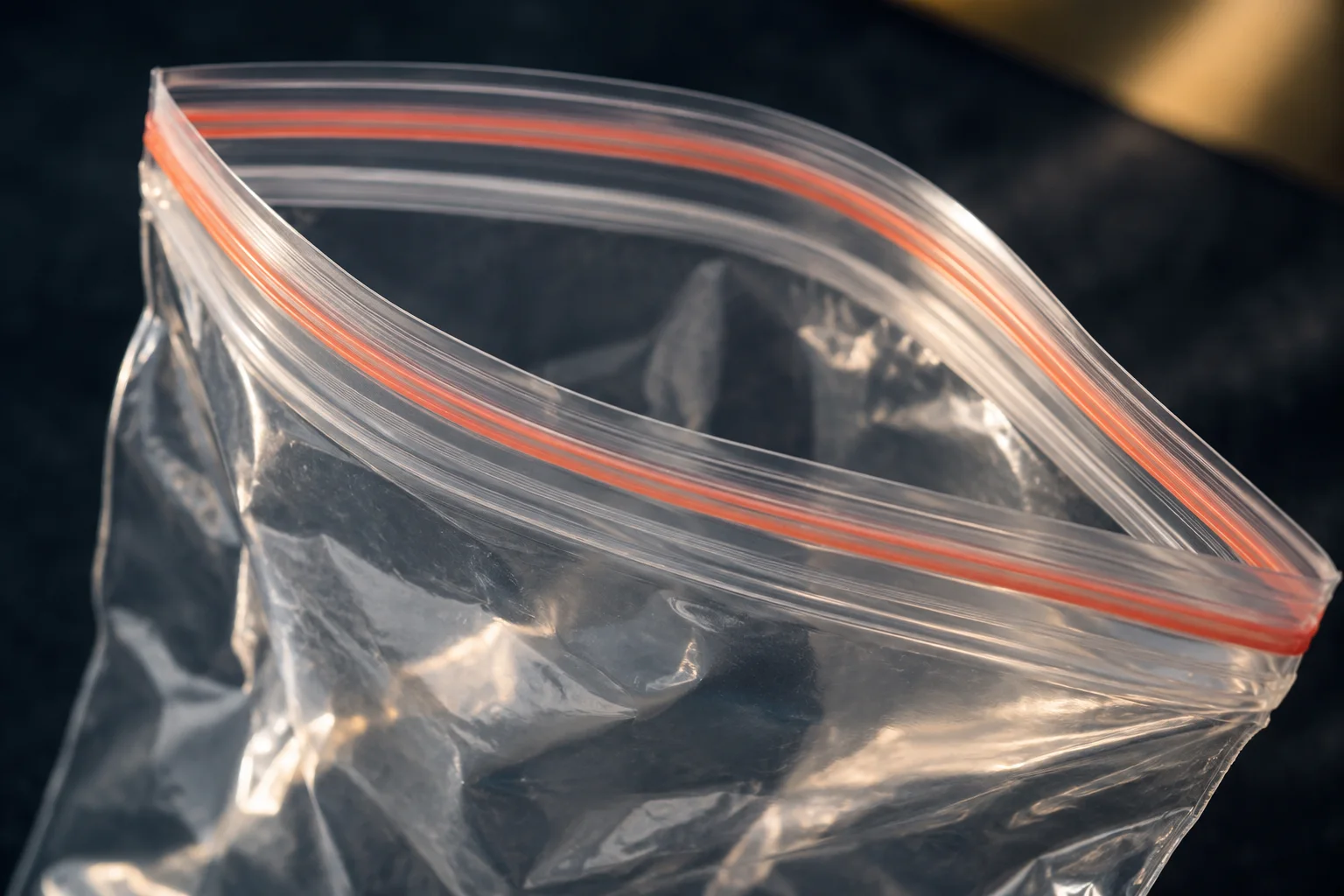
The important shape is easier to see in cross-section. In a rib-and-groove example, one strip has an arrowhead-like rib. The opposite strip has a channel with inward-facing hooks. Pressing them together puts the rib's shoulders behind the channel's hooks.
The plastic has to flex during engagement, then retain a shape that resists being pulled apart. These are continuous profiles along the bag, rather than rows of individual zipper teeth.
Sources: DowBrands Inc.; US patent publication · European patent publication
Your fingers move the closing point
Pressure at one spot only joins that part of the opening. Moving along the strip brings successive lengths into engagement. The bag film lets you apply that pressure from outside while the profiles meet on the facing inside surfaces.
The documented bag design also has extra ribs beside its closing profile. Those ribs help alignment and stiffen the surrounding film. They should not be mistaken for extra interlocking seals: their position and shape give them a different job.
Pulling separates the profiles
To open the bag, the two sides must disengage again. A slider, where fitted, provides another way to guide this joining and separation. The press-to-close example needs no separate traveling slider because your fingers apply the closing pressure directly.
Sources: European patent publication
The thing to remember
A closed-looking mouth is only useful where the profiles actually engage. The continuous strip still closes one local length at a time.
What this example leaves out
This is a simplified rib-and-groove closure. Other profiles, multiple tracks and sliders differ. The schematic does not establish an airtight, watertight or pressure-rated seal.
Sources & further reading
Source access dates are listed below. Manufacturer descriptions and patents support the specific constructions described, not every product.
- US5192135A — Profile and adjacent rib-type closure element for reclosable thermoplastic bags ↗
DowBrands Inc.; US patent publication · Retrieved 2026-10-17 · Continuous arrowhead rib hooks, groove partner, adjacent reinforcing/alignment ribs.
Selected rib-and-groove design; auxiliary ribs not portrayed as seals. No leak rating. - EP0208277A2 — Flexible fastener elements and method of securing them to a traveling web ↗
European patent publication · Retrieved 2026-10-17 · Opposing rib and groove on bag inner faces; arrowhead mates with inward hooks under pressure.
Selected continuous profile; no exact product profile or slider mechanism inferred.