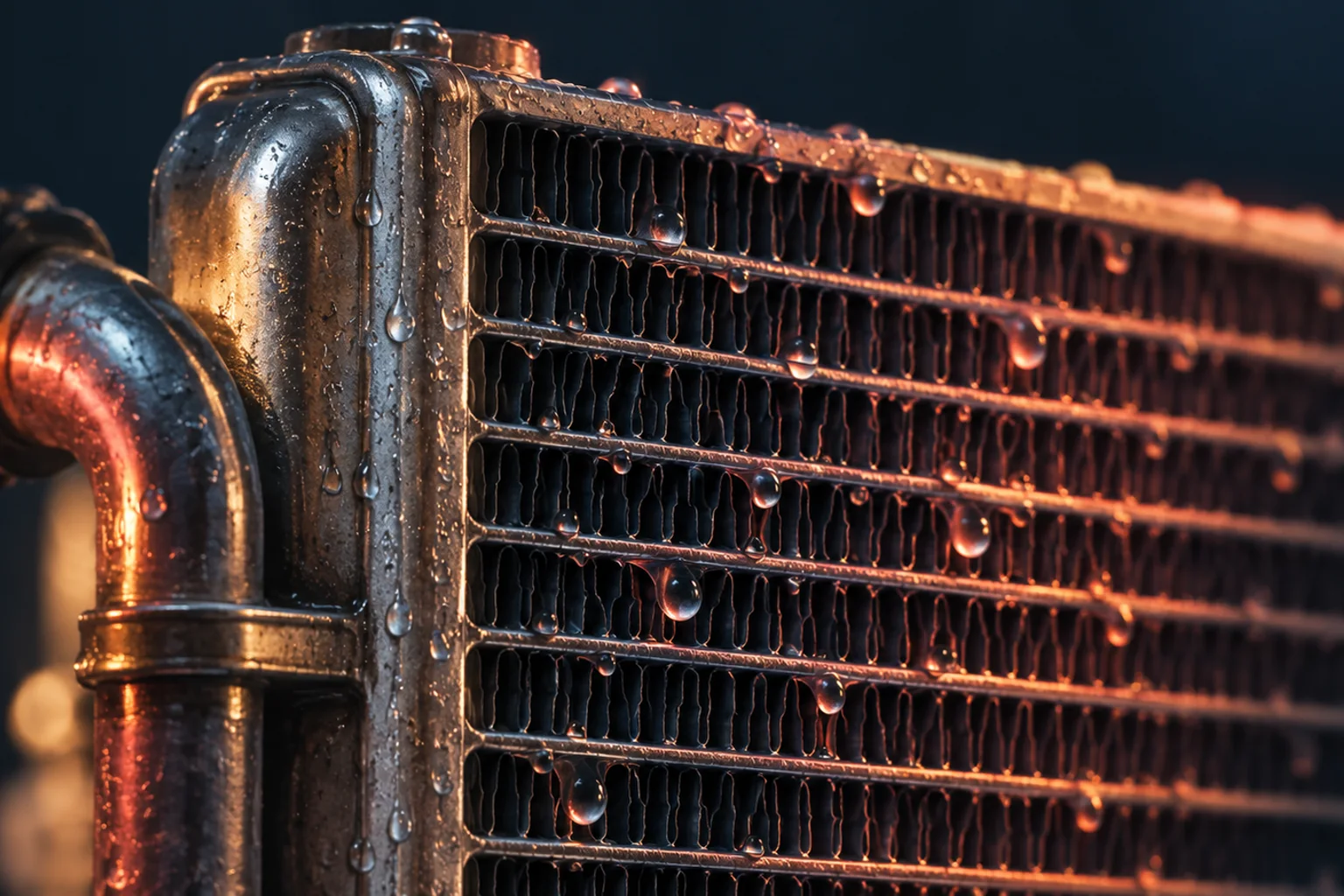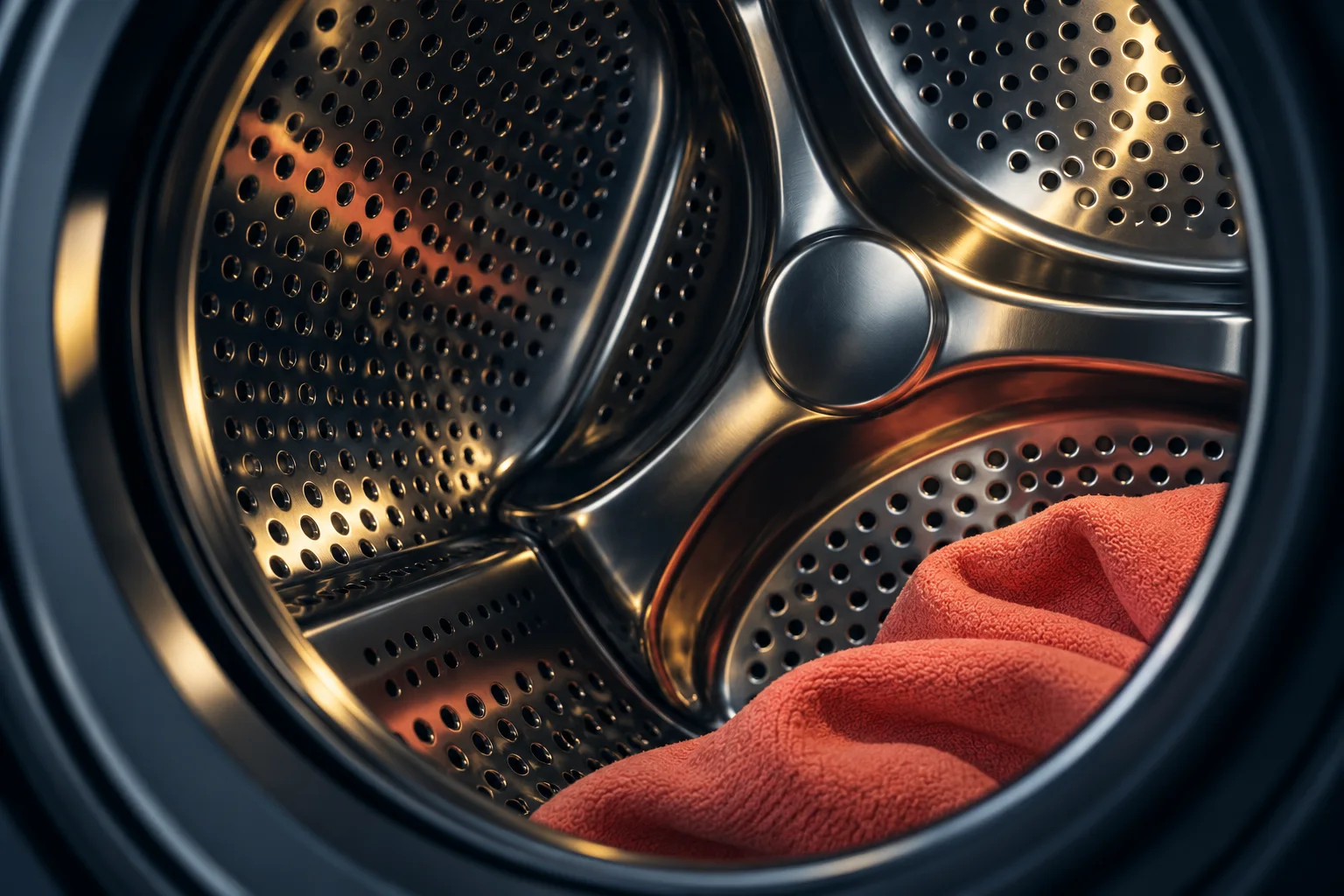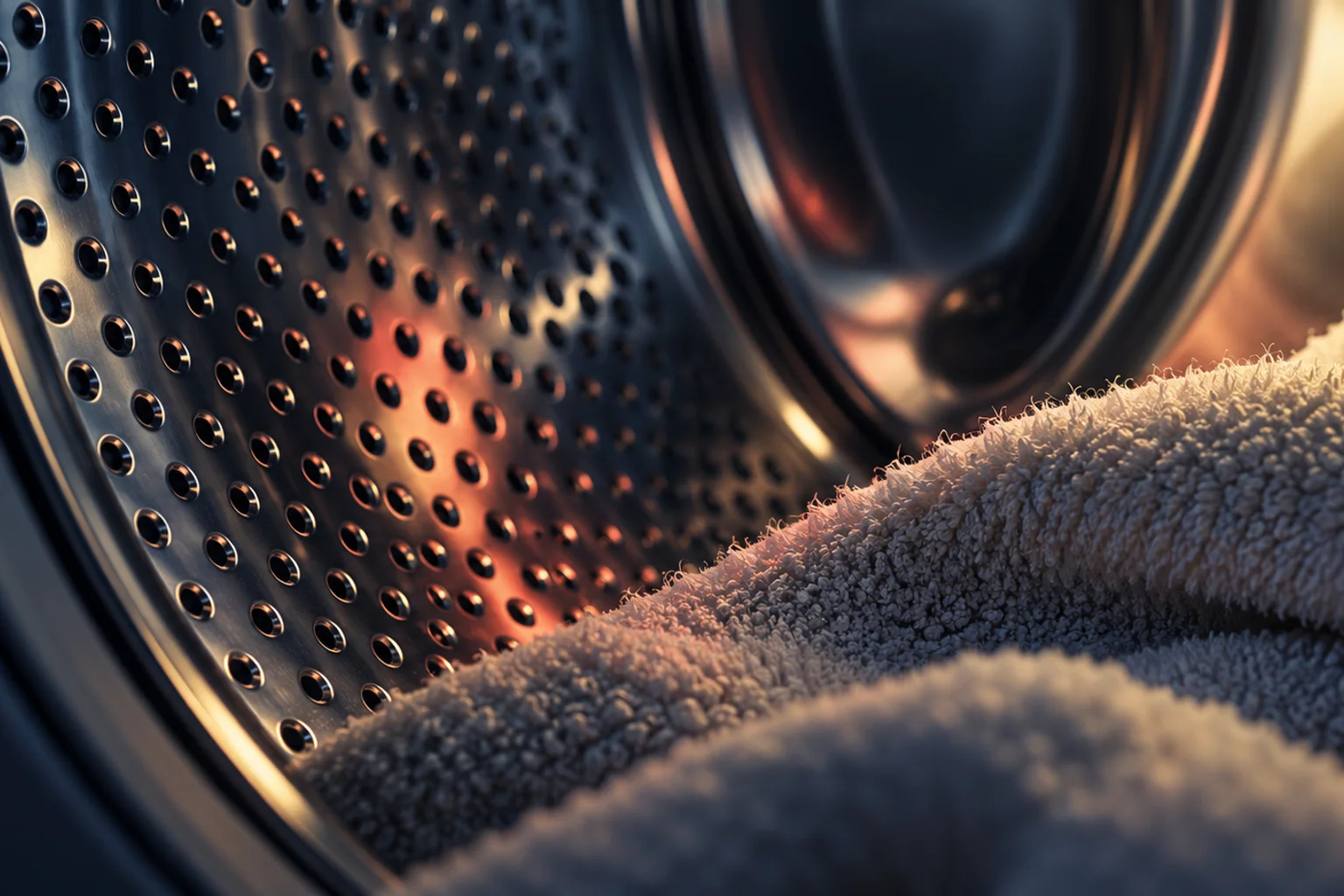
Look a little closer
See the mechanism
Two loops share heat exchangers, not fluids
Read the diagram
Warm air passes through the drum and takes up moisture from the clothes. At the cold heat exchanger, water condenses and drains away. The drier air then passes the warm heat exchanger and returns to the drum. Air is recirculated rather than mixed with refrigerant.
A separate refrigerant loop couples the two heat exchangers. Compression precedes heat release at the warm side; a restriction precedes the cold side, where refrigerant absorbs heat as it evaporates. Refrigerant returns to the compressor. Condensed laundry water belongs to the air-side drain, not this refrigerant loop.
Original functional maps, not a machine chassis or service schematic. Navy arrows in the first map are air; coral arrows in the second are refrigerant. The two named exchangers correspond between maps. Water drainage is shown only in the air map. No temperature, efficiency, refrigerant phase fraction or installation detail is assigned.
Diagram basis: ENERGY STAR: recirculation and water drainage; Miele instructions, p. 19: two separate circuits.
Sources: Miele · ENERGY STAR / US EPA
The drum transfers moisture into moving air
A blower moves drying air through the drum. Warm air passes the wet fabric and carries away water that evaporates from it. By the time that air leaves the drum, it contains more water vapor. The clothes are losing water, but the dryer still needs somewhere to put it.
A washing machine's spin cycle removes much of the liquid water mechanically before drying begins. Inside a heat pump dryer, the remaining moisture follows another route: from fabric to vapor in the air, then back to liquid at a cold heat exchanger.
Sources: Miele · ENERGY STAR / US EPA
One air stream passes cold and warm regions
After leaving the drum and passing through filters, the damp air reaches the cold part of the heat exchanger. Water vapor condenses there. The liquid is collected, while the air continues along the drying circuit.
The air then passes the warm part of the heat exchanger and is reheated before returning to the drum. It can take up more moisture on its next trip. This reuse is what distinguishes the process from sending a continuous stream of warm, damp air out through a conventional dryer vent.
Sources: Miele · ENERGY STAR / US EPA
The refrigerant stays inside its own pipes
A compressor and refrigerant-filled tubing make the heating and cooling possible. In the Miele explanation followed here, the compressor raises the refrigerant's pressure and temperature. The hot refrigerant releases heat to the drying air and becomes liquid. After a pressure drop through a narrow capillary tube, it can take up heat at the cold side and return as gas.
Air flows past these surfaces; refrigerant flows inside the tubing. They exchange heat without joining into one stream. The cold-side name evaporator refers to what the refrigerant does inside. At that same location, water from the clothes does the opposite: it condenses out of the air.
Sources: Miele
The collected water still has to leave
Condensation changes where the water is, not whether the appliance contains it. ENERGY STAR describes collection in a tank or removal through a drain connection, depending on the installation. That is the water route leaving the drying loop.
The refrigerant and much of the process air continue circulating after the collected water leaves. The compressor supplies work to maintain the warm and cold surfaces, while the blower keeps air moving through the drum and heat exchangers.
Sources: ENERGY STAR / US EPA · Miele
The thing to remember
Follow three paths separately: drying air recirculates, refrigerant recirculates, and collected water goes to a tank or drain.
What this example leaves out
This is a functional map of heat-pump drying using Miele's two-circuit explanation. It isn't a service layout or a model of all condenser dryers, and it doesn't specify temperatures, cycle time or energy savings.
Sources & further reading
Source access dates are listed below. Manufacturer descriptions and patents support the specific constructions described, not every product.
- Operating instructions — Functioning of the heat-pump dryer ↗
Miele · Retrieved 2026-10-16 · Two separate dry-air and refrigerant circuits; blower/drum/filters; cold and warm heat-exchanger regions; compressor, condensation, capillary restriction and refrigerant evaporation.
92-page manual downloaded; complete printed/PDF p19 Functioning of the heat-pump dryer read with pypdf. No whole-manual read or exact chassis geometry claimed. Original functional map may use distinct hot/cold blocks rather than copying a product cutaway. - Heat Pump Dryer ↗
ENERGY STAR / US EPA · Retrieved 2026-10-16 · Air recirculation, evaporator moisture removal, tank/drain arrangements; washer spin removes water before drying.
What Is a Heat Pump Dryer?, Water Drainage and washer-spin paragraph read, web lines18–19,40–46. Quantitative efficiency, temperature and installation claims not adopted; no video watched.