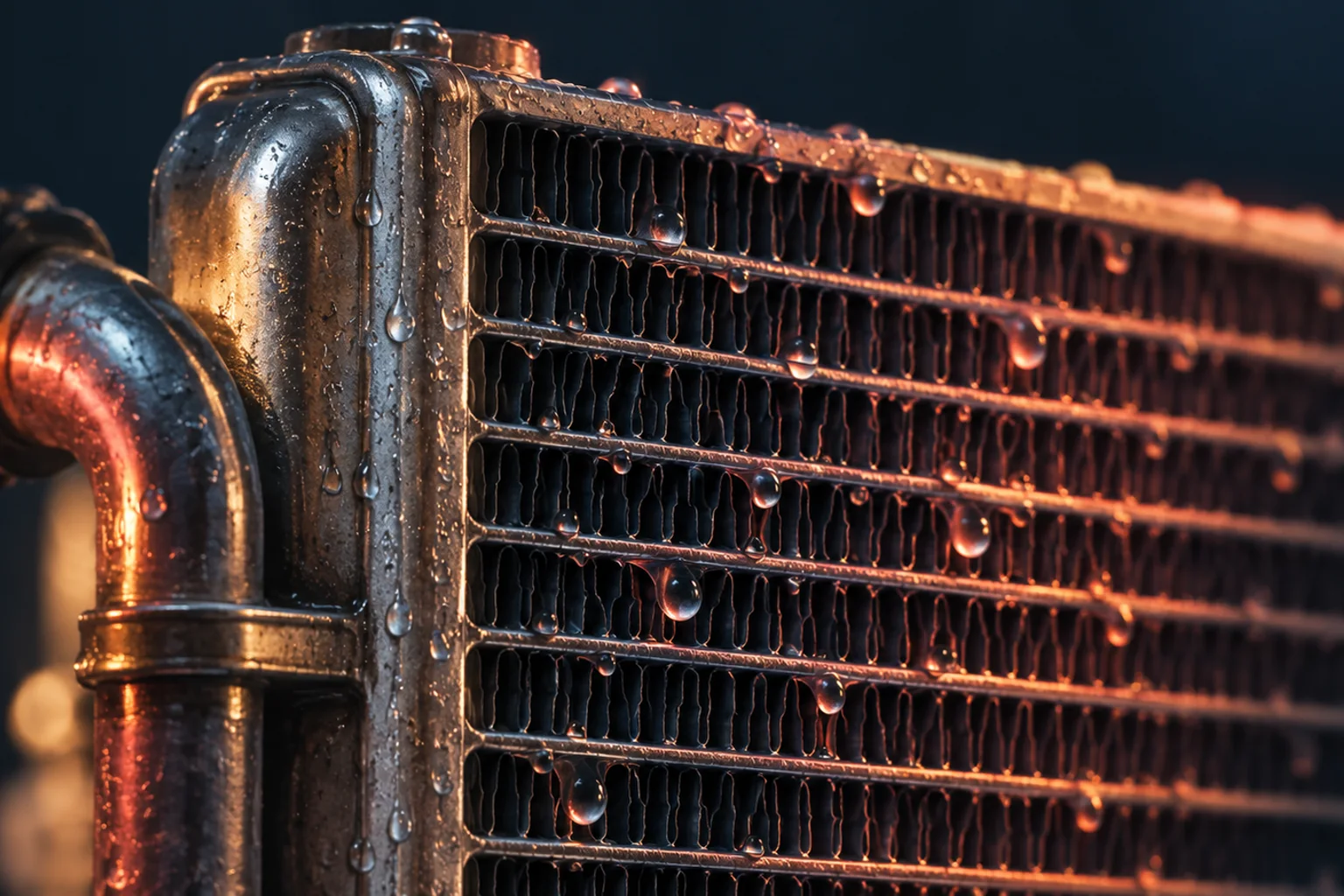
Look a little closer
See the mechanism
The outlet air is downstream of both coils
Read the diagram
Room air passes a cold coil. If that surface is below the air’s dew point, some water vapor condenses into liquid and drains into a collector. The air then passes the warm side of the refrigeration system before returning to the room. This is a compressor dehumidifier, not a desiccant wheel.
Original functional airflow section, not a particular appliance layout or temperature field. Blue drops are condensed liquid; invisible inlet water vapor is not drawn as liquid drops. Refrigerant plumbing is omitted. No universal outlet temperature, extraction rate or whole-room health result is represented.
Diagram basis: Meaco: compressor coils, condensation and reheat.
Sources: Meaco · ENERGY STAR / US EPA · Meaco; Chris Michael
The inlet doesn't need a visible cloud
Moist air can look completely clear. Its water vapor is water in the gas phase, mixed with the other gases around us. The fan moves some of that room air through a filter and toward the refrigerated surface.
At a sufficiently cold surface, some of the vapor becomes liquid. It gathers into drops, which can run down into the bucket or collection system. The dehumidifier hasn't manufactured new water: it has collected water that was already present in the air.
Sources: Meaco · ENERGY STAR / US EPA
The cold surface is maintained by refrigeration
The fan alone would only circulate air. The refrigeration system maintains a surface cold enough to produce condensation under suitable conditions. ENERGY STAR's definition separates the evaporator surface, refrigeration system, air-circulating fan and means of collecting the condensate.
Airflow brings more moisture-bearing air to the refrigerated surface. Condensation separates some of that moisture into liquid, which drains away from the air stream into the collection system.
Sources: ENERGY STAR / US EPA · Meaco
The outgoing air is warmed again
Meaco describes the cooled air being reheated before it is blown back out. That second part matters: a cold internal coil doesn't imply a cold room-air outlet. Compressor models can return air slightly warmer than the room while removing moisture.
A refrigerator also uses refrigeration, but its cold compartment and heat-releasing surfaces serve a different arrangement. In a room dehumidifier, the treated air comes back into the same room. The useful result is water leaving that air and accumulating in a separate collection route.
Sources: Meaco · Meaco; Chris Michael
The thing to remember
Air passes a cold surface, vapor becomes liquid, and the collected water is separated before the air returns warmed to the room.
What this example leaves out
This follows a compressor/refrigeration dehumidifier. Desiccant-wheel and other designs remove moisture differently. The figure doesn't give a room-sizing rule, extraction rate, minimum operating temperature or guarantee about mold or health.
Sources & further reading
Source access dates are listed below. Manufacturer descriptions and patents support the specific constructions described, not every product.
- A guide to dehumidifier basics ↗
Meaco · Retrieved 2026-10-16 · Compressor dehumidifier draws filtered room air over cold coils; water condenses and enters bucket; air is reheated before return; other dehumidifier families differ.
How does a dehumidifier work? and cold-surface condensation passages read, web lines24–32. Outdated product, price, health and universal mold claims excluded. Functional airflow, no exact coil placement inferred. - Dehumidifiers Key Efficiency Criteria — Eligible Product Types ↗
ENERGY STAR / US EPA · Retrieved 2026-10-16 · Definition identifies refrigerated evaporator surface, refrigeration system, circulation fan and condensate collection/disposal as separate parts.
Primary eligible-type definition read via opened page and extracted result. Used for mechanism components, not a current purchasing/qualification rule or all desiccant technologies. - When to buy a desiccant dehumidifier and when to buy a compressor dehumidifier ↗
Meaco; Chris Michael · Retrieved 2026-10-16 · Compressor outlet air can be slightly warmer than inlet/room air; cold internal surface doesn't entail a cold supply outlet.
Which type of dehumidifier is best to keep your house warm and dry? relevant paragraph read, web lines50–54. Exact temperature, cost, health and whole-room heating claims not adopted; source's inconsistent broad room-heating shorthand not repeated.