Look a little closer
See the mechanism
Two ways to retract the spring latch
Read the diagram steps
Handle turns. The square spindle turns the follower. Its arm acts on the bolt mechanism and pulls the latch into the door against its spring. Releasing the handle lets the mechanism reset.
Door closes. The strike presses on the beveled latch face as the door closes. That contact pushes the bolt inward without requiring a handle turn. Once past the strike, the spring projects the bolt into the opening.
Selected spindle/follower and spring-latch principle, with a simplified follower-to-bolt connection. The right-hand inset is the beveled nose meeting the strike; it is not a key-operated lock mechanism.
Diagram basis: GB2483888A: spindle follower and latch bolt.
Sources: UK patent publication
A turning follower pulls a sliding bolt
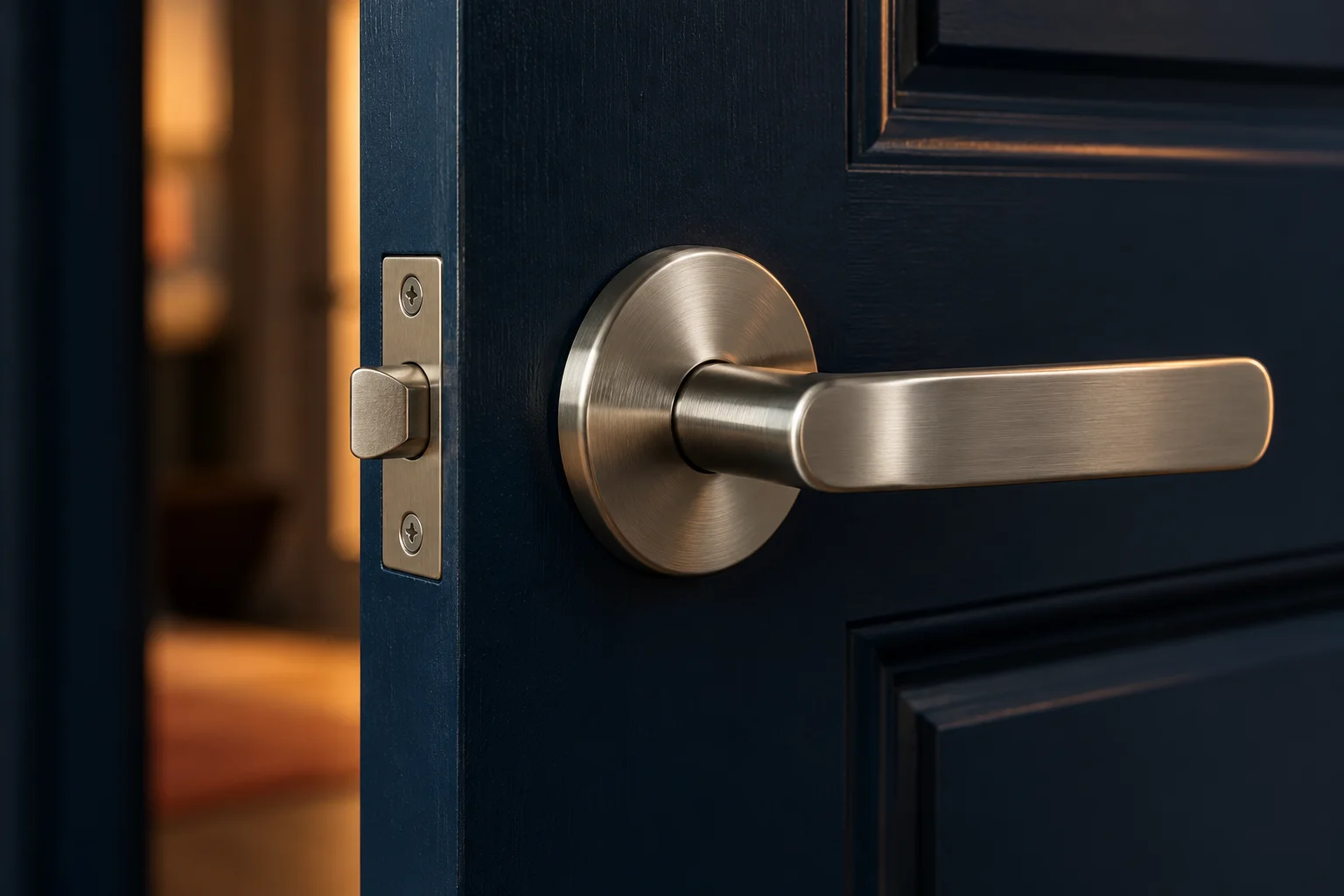
The spindle passes through a follower inside the latch. When the handle turns, follower arms draw the bolt into its case against spring force. Once the bolt clears the strike plate, the door can open.
Sources: UK patent publication
The bevel provides another way in
Closing brings the sloped face against the strike. The strike pushes the bolt inward until it reaches the opening, where the spring projects it again. Its straight face then bears against the strike and holds the door closed.
A latch can catch automatically without being locked. A lock may restrict its release; the spring latch itself supplies the catching action.
Sources: UK patent publication
The thing to remember
The handle retracts the bolt from inside; the closing strike presses it in from outside.
What this example leaves out
A simplified spring latch and follower. Deadlatches, deadbolts and lock functions differ.
Sources & further reading
Source access dates are listed below. Manufacturer descriptions and patents support the specific constructions described, not every product.
- GB2483888A — Mortise latch ↗
UK patent publication · Retrieved 2026-10-17 · Spindle/follower arms retract spring latch; bevel strike contact; straight face holds door in frame.
Background conventional mechanism only; proposed extra spring and security functions not generalized.