Look a little closer
See the mechanism
The ball cams the cup against the spring
Read the diagram steps
Coupling seated. A spring-loaded cup holds a ball in the drive shank’s recess. Below the release threshold the lever and shank remain substantially aligned.
Small release movement. The ball rides along the recess and pushes the cup against the spring. The lever can pivot slightly; the shank end strikes its inner wall, producing the click.
Selected US7451674 ball/cup coupling, not every click wrench. Ball may remain in the recess during camming. Spring and clearances are illustrative; no torque value or calibration instruction.
Diagram basis: US7451674: Figs. 4–7 and release description.
Sources: USPTO / Google Patents
Torque reaches the release through the head
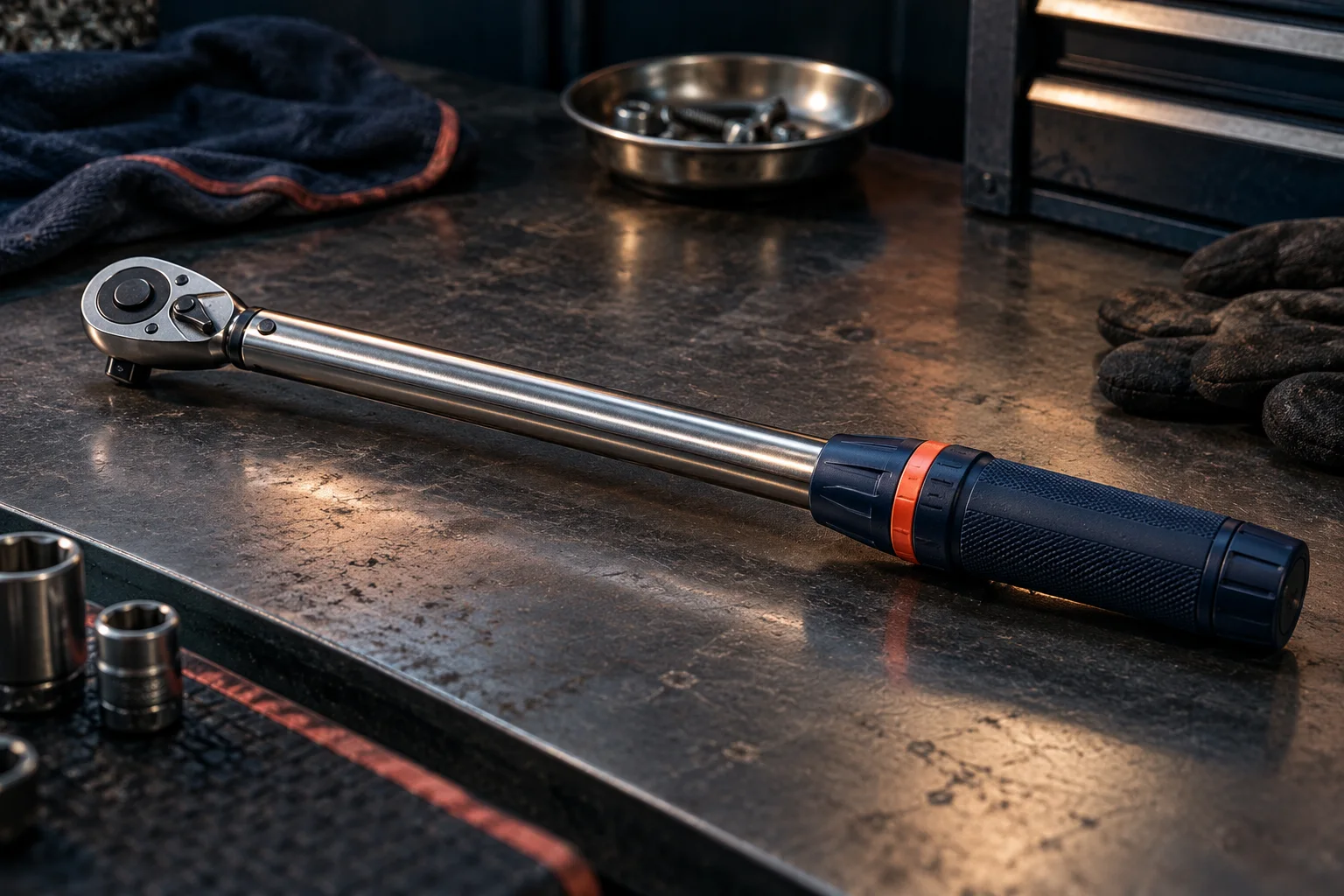
A force applied some distance from the fastener axis creates a turning moment: torque. The wrench transmits that load from the handle to its drive head. Inside a click wrench, the path includes a coupling held in position by a spring.
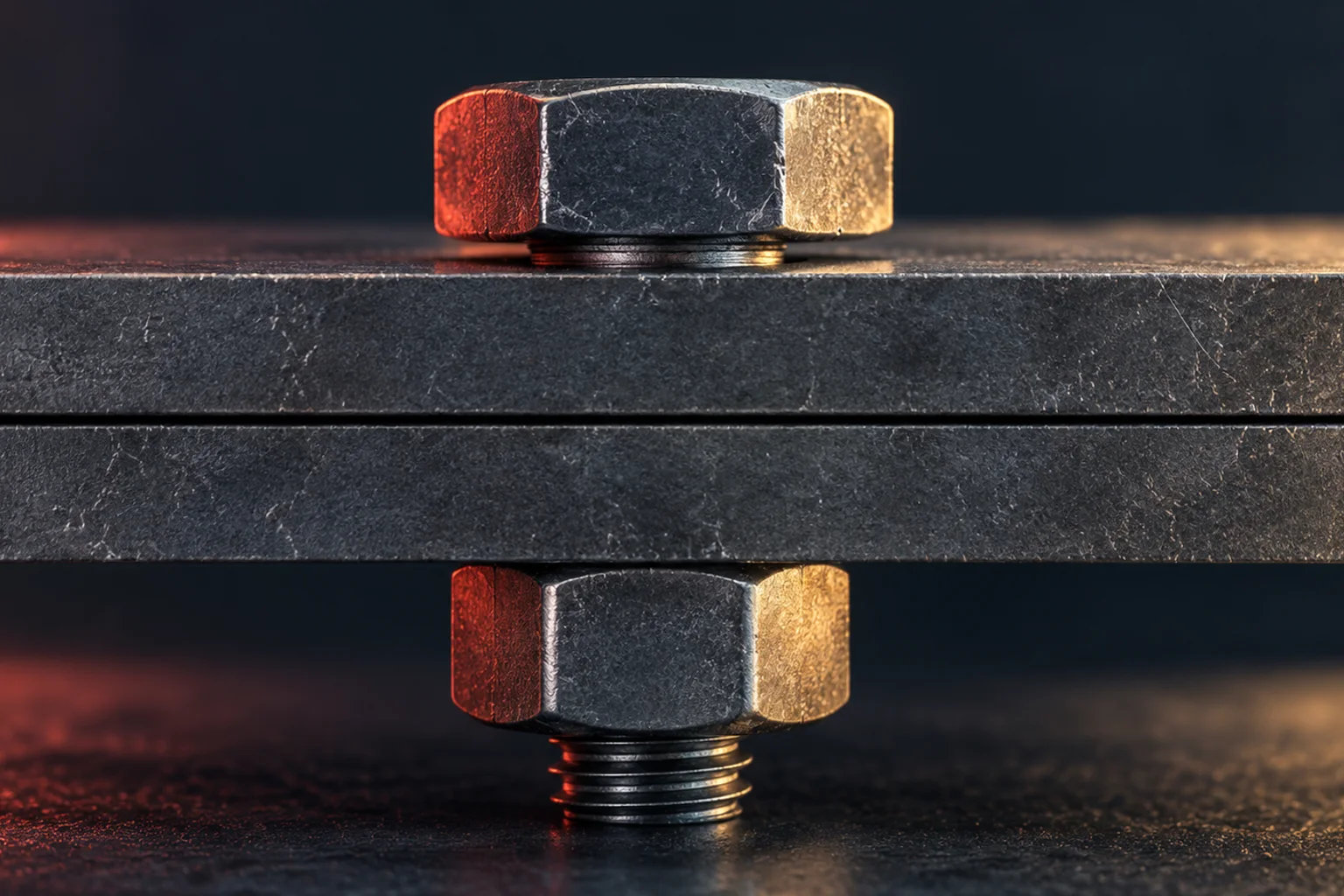
Below the release threshold, the coupled members move together. Increasing torque increases the force tending to displace the coupling. The spring and contact geometry resist that movement until the release condition is reached.
Sources: USPTO / Google Patents
A ball can turn that threshold into a click
The example in U.S. Patent 7,451,674 uses a ball seated in a recess at the end of the drive shank. A spring-loaded cup presses against it. When the load is high enough, the ball rides along the recess surface and pushes the cup back against the spring.
That movement lets the surrounding lever pivot slightly relative to the shank. The shank end strikes the inside of the lever, creating the click and the sensation in the handle. The sound comes from a sudden mechanical movement, rather than from a separate electronic alarm.
Sources: USPTO / Google Patents
The signal describes the tool, not the whole joint
Changing spring preload changes the resistance at the release. The setting belongs to this spring-and-contact mechanism; a marked scale and a click alone do not prove the present accuracy of a particular wrench.
Nor is a click a universal shutoff. Click mechanisms can still transmit load after their initial movement. Bolt clamping force also depends on the joint and friction, so the sound cannot by itself certify how much tension is in a bolt.
Sources: USPTO / Google Patents
The thing to remember
The spring sets resistance to release; the abrupt movement at release creates the click.
What this example leaves out
The ball-and-cup coupling is one documented example. Other click wrenches use different release parts. This explanation supplies no torque values, calibration method or instructions for safety-critical fastening.
Sources & further reading
Source access dates are listed below. Manufacturer descriptions and patents support the specific constructions described, not every product.
- US7451674B2 — Adjustable click-type torque wrench ↗
USPTO / Google Patents · Retrieved 2026-10-18 · Detailed Description Figs4–7: ball125/recess127/cup130/springS; cup displaced, lever pivots and shank strikes surface120. Background notes post-click overtorque in micrometer type.
Actual HTML and direct fetched description read. Ball/cup example only; preload qualitative, no calibration or universal shutoff claim. Torque versus bolt tension is basic mechanics analysis.