Look a little closer
See the mechanism
The coating stays; the carrier returns
Read the diagram
Separate paths at the head. Fresh carrier tape leaves the supply reel, passes around the transfer head against the paper, then returns to the take-up reel. The white coating transfers to the paper; the used carrier continues back into the dispenser.
Original tape-route schematic. Coral identifies the transfer coating, not its actual white color. Reel sizes, thicknesses and path lengths are exaggerated; reel gearing is omitted.
Diagram basis: Tombow: correction-tape transfer.
Sources: TOMBOW PENCIL · TOMBOW PENCIL · TOMBOW PENCIL
Three layers arrive at the head
Tombow describes an adhesive layer, a white correction coating and a base tape. The coating contains white pigment and resin; its surface is made to accept new writing. The base tape supports that thin coating on its journey through the dispenser.
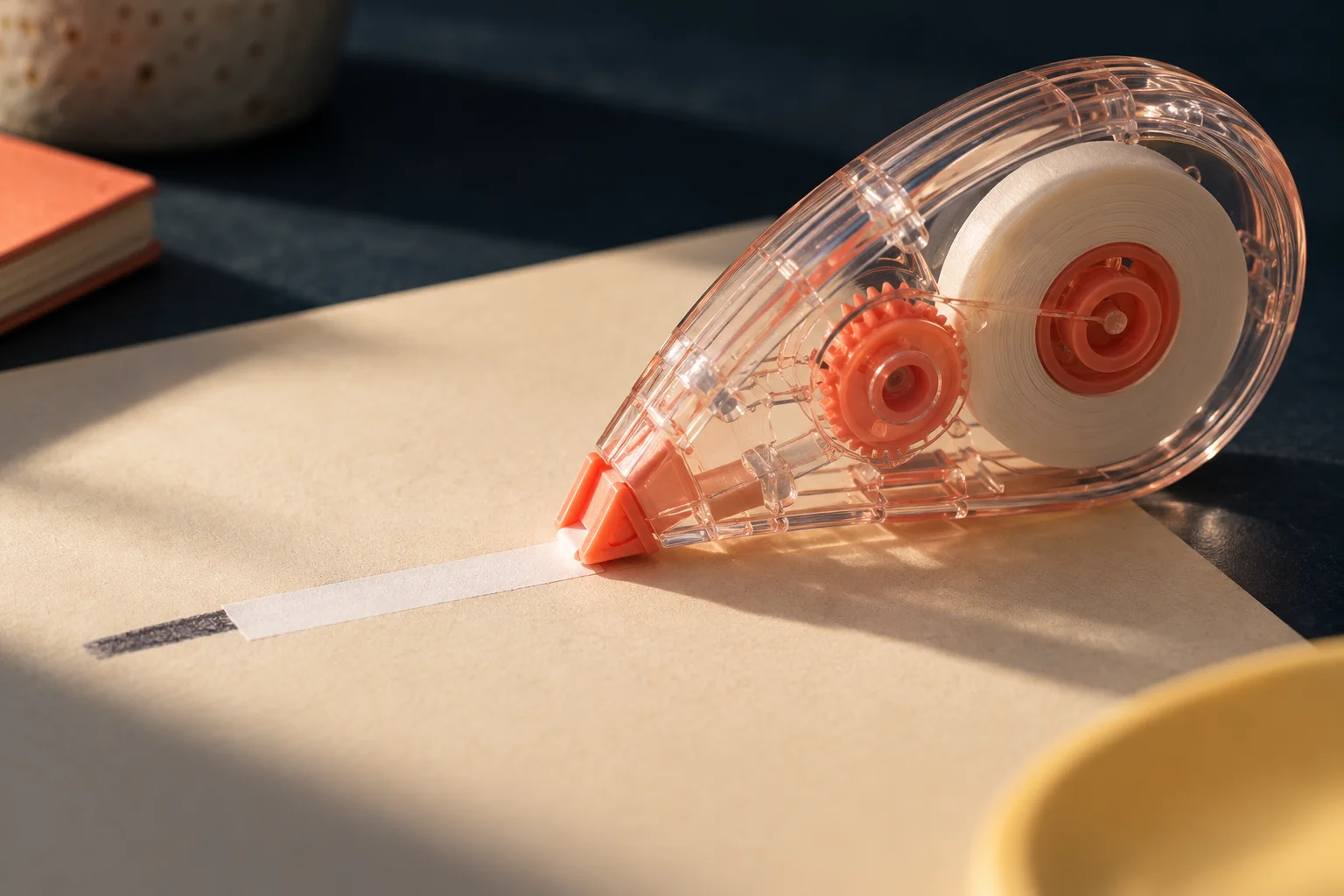
At the head, pressure brings the adhesive into contact with the paper. As the dispenser moves, the carrier bends around the head and returns into the case. The transferred coating continues along the page instead of following that bend.
Sources: TOMBOW PENCIL · TOMBOW PENCIL
Why there are two reels
One reel gives up unused tape; the other collects the carrier after transfer. In Tombow's gear-driven example, movement of the supply reel drives the take-up reel. A slipping connection accommodates their changing diameters.
That detail matters because the full reel shrinks while the used reel grows. A rigid ratio between their rotations would not keep taking up the same length of tape throughout the roll.
Sources: TOMBOW PENCIL
A covered mark is still there
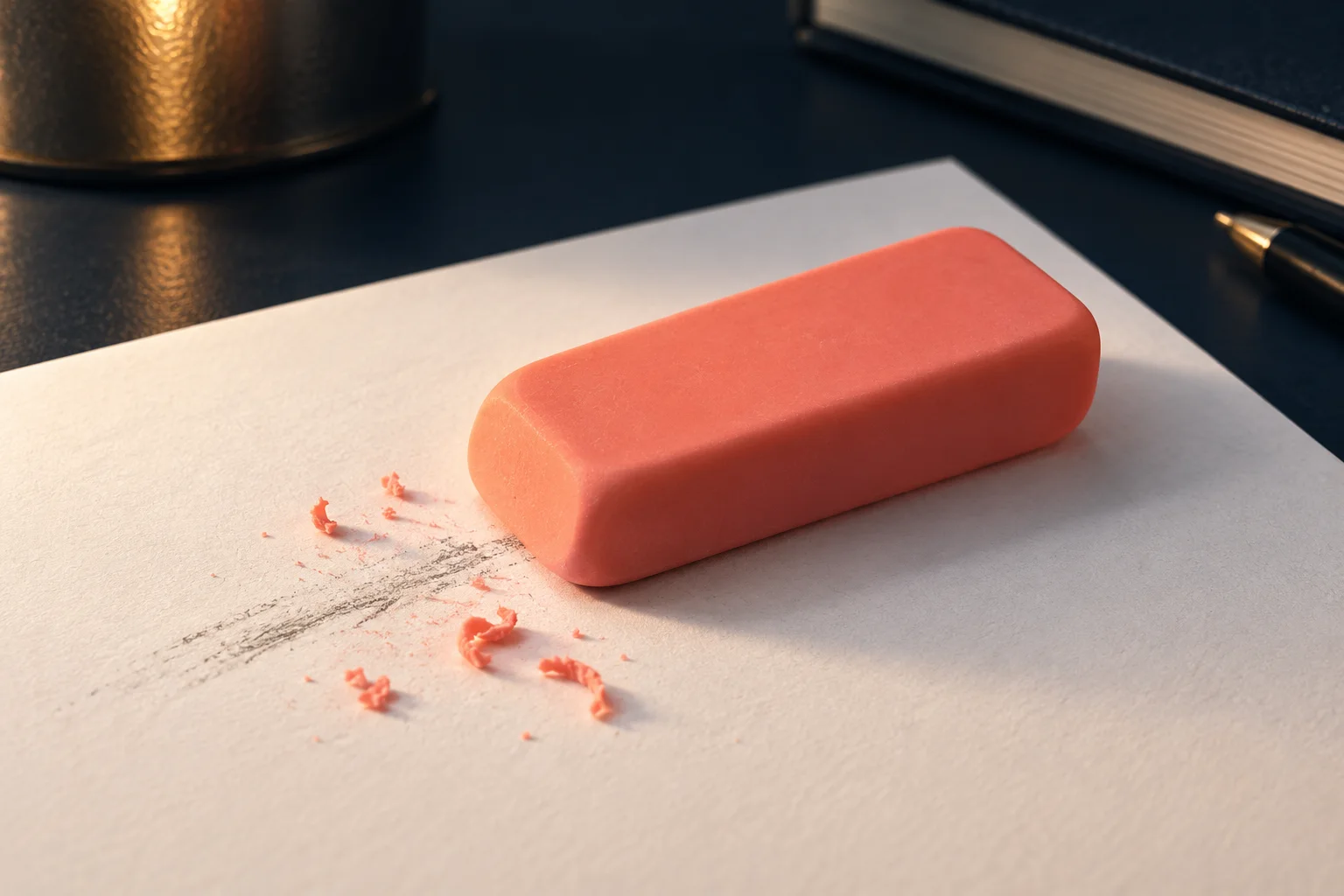
Correction tape adds a new writing surface over the old one. An eraser instead removes or displaces marking material. The white strip's edge is the boundary of a covering layer, not a cleaned patch of paper.
Sources: TOMBOW PENCIL
The thing to remember
The strip you see is only the transferred coating. The carrier that delivered it is collected inside the dispenser.
What this example leaves out
This is a dry transfer tape with a supply reel and take-up reel. Drive arrangements vary; it does not describe correction fluid or guarantee adhesion on every coated paper.
Sources & further reading
Source access dates are listed below. Manufacturer descriptions and patents support the specific constructions described, not every product.
- Tape structure and material ↗
TOMBOW PENCIL · Retrieved 2026-10-17 · Adhesive, white coating and carrier layers; pigment/resin and writing surface.
Manufacturer tape construction; dimensions and recipes omitted. - Transcription mechanism ↗
TOMBOW PENCIL · Retrieved 2026-10-17 · Pressure and motion transfer correction film to paper; base tape separates.
Selected dry transfer mechanism; no ink removal. - Tape winding mechanism ↗
TOMBOW PENCIL · Retrieved 2026-10-17 · Reel rotation, geared take-up and slipping O-ring accommodates changing reel sizes.
One documented drive arrangement, not all dispensers.