Look a little closer
See the mechanism
The reel returns; the brake stops
Read the diagram steps
Free reel. The line wraps around a reel. An outward pull loads the return spring; when slack is available the spring rotates the reel back.
Button brake engaged. The button engages a stop associated with the reel, preventing further unwinding. A separate brake lock can retain that button position.
Functional conventional button/projection mechanism from the patent background. No damped disk, automatic brake, restraint rating or animal-handling instruction is shown.
Diagram basis: US20110239956 background; flexi instructions.
Sources: USPTO / Google Patents · flexi North America
Pulling out stores the return energy
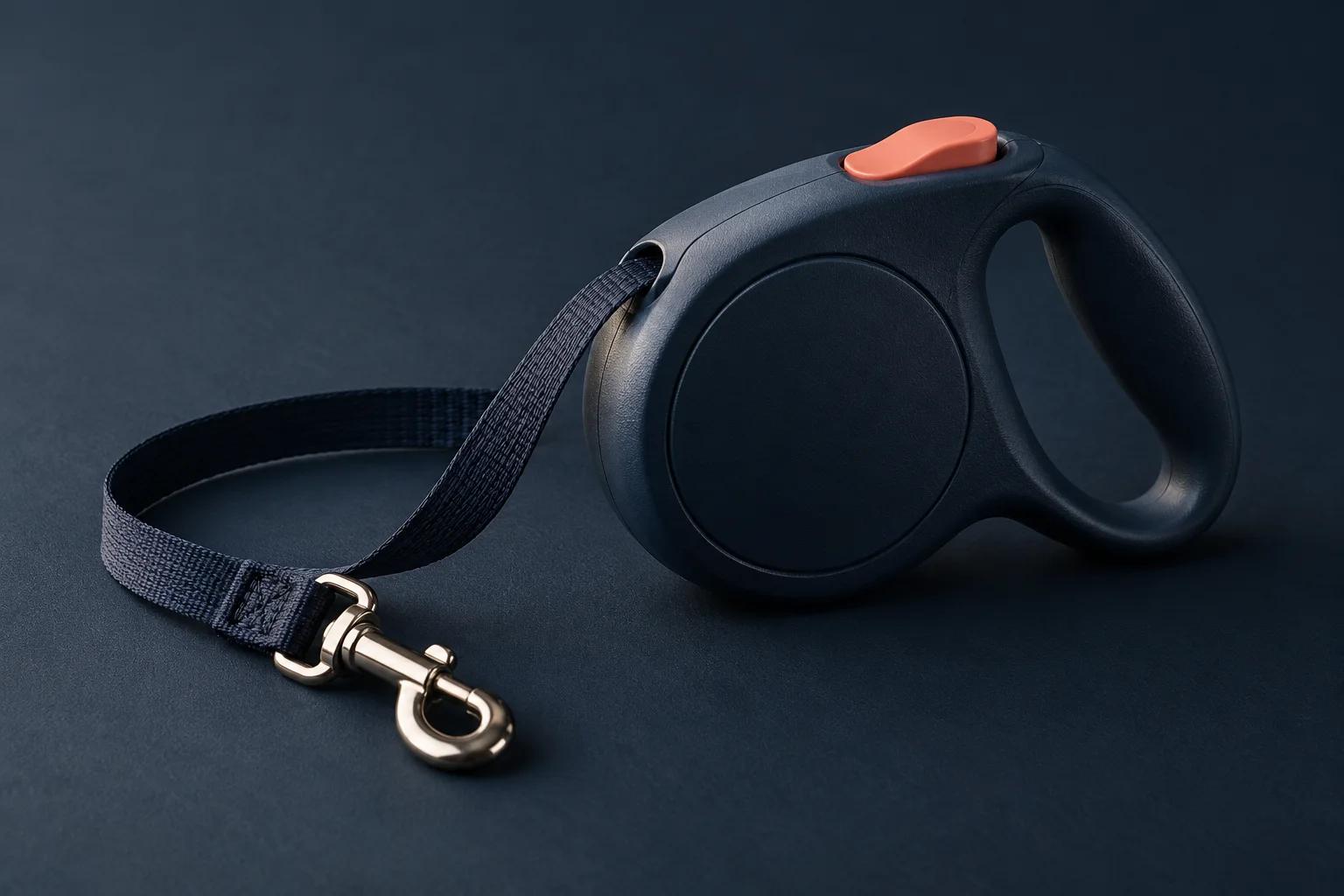
The line wraps around a rotating spool inside the case. An outward pull turns that spool, loading its return spring. The case provides the fixed support against which the spring acts.
When the distance to the free end decreases, the spring can rotate the spool back and collect the excess line. Retraction therefore takes up slack. It doesn't establish that the reel can pull an animal toward the handle against any opposing load.
Sources: USPTO / Google Patents
Stopping rotation stops more line leaving
The brake acts inside the case on the reel mechanism. In the conventional arrangement described in the source patent's background, a button engages locking projections associated with the reel. That contact prevents further unwinding.
The force path changes when this contact engages: an outward pull is resisted through the reel and brake into the housing, rather than simply turning the reel against its spring. The spring and brake have different jobs even though both affect movement of the same spool.
Sources: USPTO / Google Patents
The thing to remember
The return spring retrieves available slack; the brake and its lock control whether the reel can turn.
What this example leaves out
This explains a conventional spring reel and button/lock arrangement. The cited patent also proposes a damped brake that is not shown here. No restraint rating, animal-handling method or repair procedure follows from this schematic.
Sources & further reading
Source access dates are listed below. Manufacturer descriptions and patents support the specific constructions described, not every product.
- US20110239956A1 — Braking Device for a Rope Pulley of a Mechanically Retractable and Extendable Leash for Walking Animals ↗
USPTO / Google Patents · Retrieved 2026-10-18 · BACKGROUND first3paragraphs: spring spool, conventional button engages locking projections, stops at least unwinding; spring takes up slack.
Actual HTML read. Conventional background system, not later damped-disk invention; no animal handling/rating claim. - Instructions ↗
flexi North America · Retrieved 2026-10-18 · Free run/Stopping/Heeling distinguish button brake and brake lock.
Actual HTML read; control-state distinction only. No handling directions reproduced or universal internals inferred.