Look a little closer
See the mechanism
From solid fuel to burning vapor
Read the diagram
A self-sustaining fuel path. Heat melts the nearby wax. Liquid climbs the wick, vaporizes near the flame and reacts with oxygen. Some heat returns to melt more wax.
Fuel and energy paths, not a flame-temperature map. Wick, wax blend and airflow change burning behavior.
Diagram basis: National Candle Association: How Candles Burn.
Sources: National Candle Association · Flinn Scientific
The solid candle becomes a liquid supply
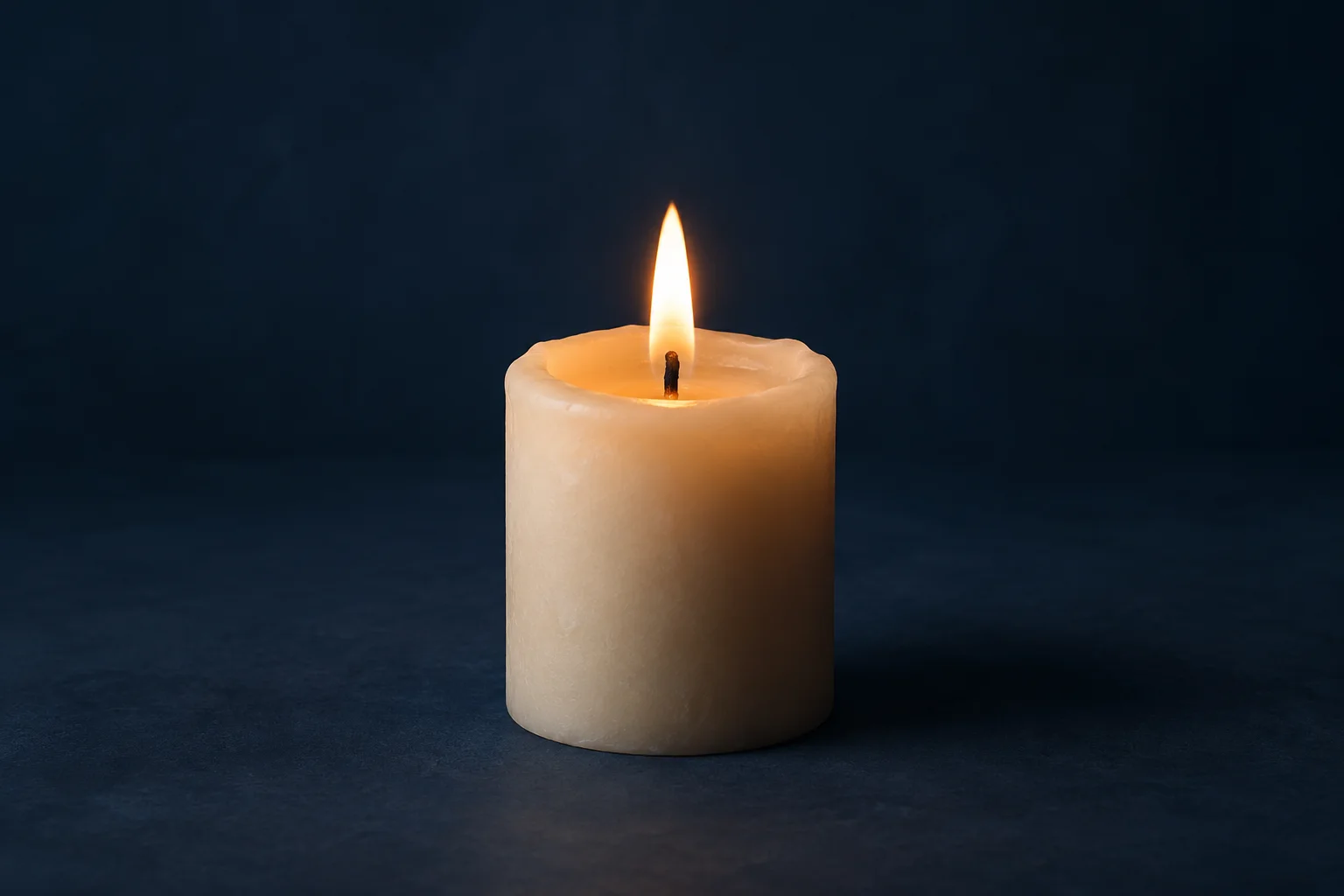
The bulk of the candle stores fuel in a shape that can stand on its own. Near the flame, a shallow pool melts. The wick bridges that pool and the hot region above it.
Capillary action moves liquid through the wick's fine passages. The same broad effect supplies ink through a felt-tip marker, although a candle adds heat and combustion to the route.
Sources: National Candle Association · Flinn Scientific
The flame burns fuel delivered as vapor
Wax reaching the hot wick vaporizes. Fuel vapor mixes and reacts with oxygen around the wick, releasing energy. The wick holds the fuel-delivery path in place; wax supplies most of the continuing fuel.
The process sustains itself while enough heat returns to the wax and fuel and oxygen remain available. Disturbing that balance can change the flame and produce soot.
Sources: National Candle Association · Flinn Scientific
The thing to remember
The fuel changes state on its way to the flame: solid wax, liquid in the wick, then vapor that burns.
What this example leaves out
Wax blends, wick construction and airflow affect burning. This explains a candle's fuel path, not a fire experiment or a guarantee of clean combustion.
Sources & further reading
Source access dates are listed below. Manufacturer descriptions and patents support the specific constructions described, not every product.
- Candle Science — How Candles Burn ↗
National Candle Association · Retrieved 2026-10-18 · Melting, capillary wick supply, wax vaporization, combustion and return heat; soot when combustion disturbed.
Read How Candles Burn, web lines 108–121. General industry explanation; temperatures, emissions guarantees and simplified molecular breakdown claims not adopted. - Wax Vapor Combustion in a Test Tube ↗
Flinn Scientific · Retrieved 2026-10-18 · Candle fuel is wax vapor reacting with oxygen and releasing heat.
Read scientific background in PDF, not performing or reproducing experiment. No procedure or quantities included.