
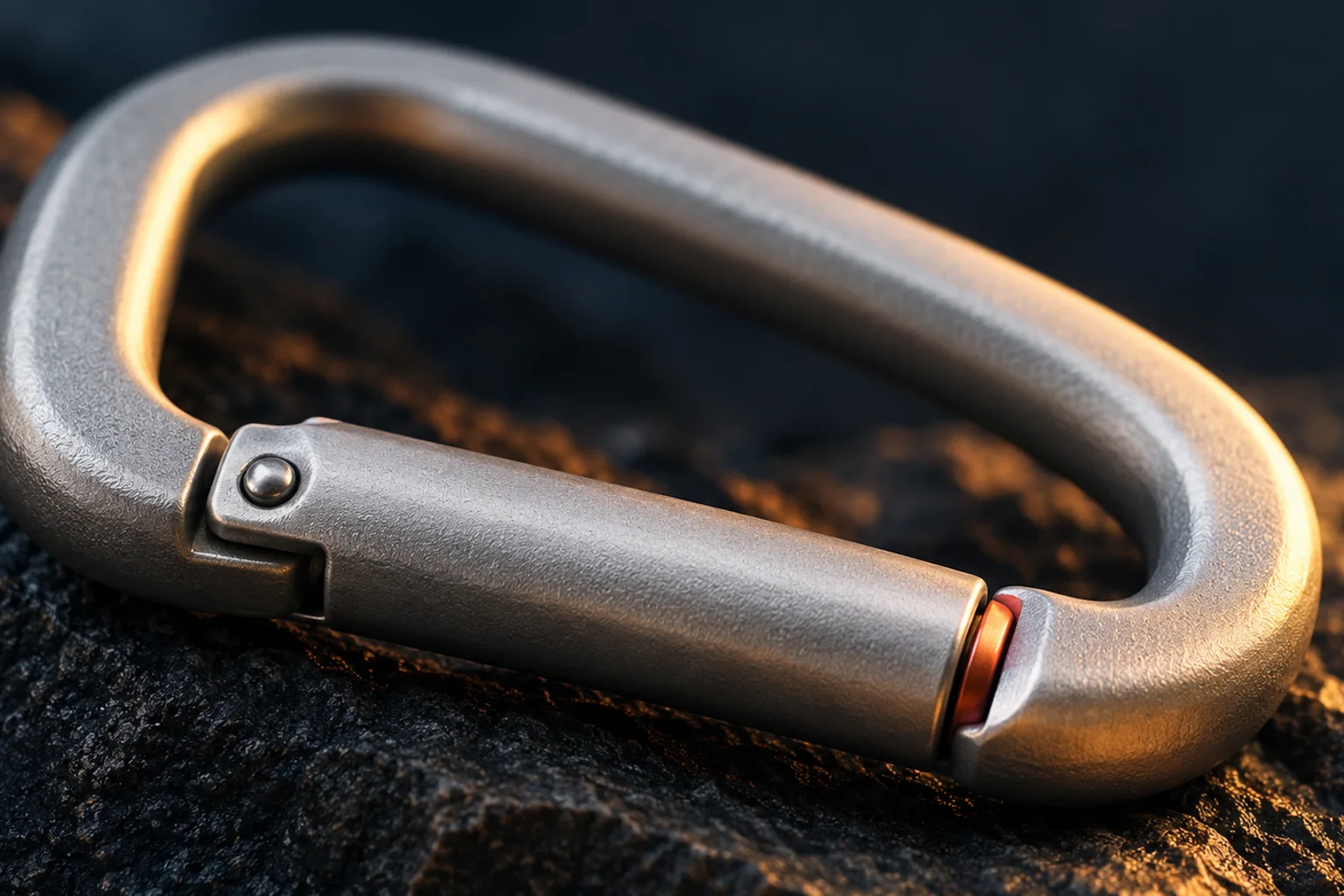
Look a little closer
See the mechanism
The closed gate changes the frame connection
Read every step
- Closed, nose engaged. The closed gate engages the nose and completes a connection across the frame opening. The nose/gate interface contributes structurally to the closed connector. A return spring closes the gate; an optional locking sleeve is a separate way to restrain opening.
- Open, nose disconnected. The gate pivots inward around its hinge and separates from the nose. The opening interrupts that connection. This comparison shows the connection, not a fabricated stress field, strength ratio or equipment-use instruction.
Original generic keylock-style principle, not a named certified connector. Nose and pocket detail are simplified and enlarged. The gate pivots about a fixed hinge. No kN value, exact load sharing, deformation simulation or claim that a spring alone provides the structural bridge is made.
Diagram basis: Black Diamond QC Lab: gate/nose engagement and closure types.
Sources: Black Diamond · Petzl
The end of the gate engages the frame
Black Diamond describes both hook-and-pin and keylock nose arrangements as ways for the gate to interface with the carabiner body and provide closed-gate strength. In a keylock example, a shaped pocket in the gate meets the nose. The gate isn't merely a cover hiding the opening.
With the gate engaged, the nose and gate transfer force through their contact. Opening the gate removes that contact. The frame's shape and the engaged connection both affect how a real connector carries a load.
Sources: Black Diamond
Closing, locking and carrying load are separate functions
The hinge permits opening, the return spring urges the gate closed, and a locking sleeve can prevent unintended gate opening. The spring supplies the closing movement; the engaged nose interface forms the structural connection across the opening.
Petzl's technical notice names frame, gate, hinge, locking sleeve and keylock parts separately. It also states that the named carabiner is strongest when closed and loaded along its major axis. Closed does not make every loading direction equivalent.
Sources: Petzl · Black Diamond
The principle doesn't supply a safe load
The maker's open- and closed-gate distinction explains why the gate matters, but its numerical rating belongs to that connector and its specified condition. A decorative accessory can resemble a climbing carabiner without sharing its construction or qualification.
Sources: Petzl · Black Diamond
The thing to remember
The gate-to-nose engagement is part of the closed structure. The spring brings the gate back; a locking sleeve helps keep it from opening.
What this example leaves out
The figure selects a generic keylock-style connection and shows no certified product geometry or loads. Wiregate and other nose designs differ. Follow the actual equipment's current instructions for any real use.
Sources & further reading
Source access dates are listed below. Manufacturer descriptions and patents support the specific constructions described, not every product.
- QC LAB: Choosing the Right Carabiner ↗
Black Diamond · Retrieved 2026-10-16 · Gate/body hook-pin and keylock pocket/nose interfaces provide closed-gate strength.
Actual Keylock Gate vs Non-Keylock Gate passage lines294–302 read. No numeric tests, equal frame-side load division or equipment-choice guidance adopted. - Am’D TRIACT-LOCK M345003E250712 — Technical notice ↗
Petzl · Retrieved 2026-10-16 · Named frame/gate/hinge/locking-sleeve/keylock parts; closed/major-axis versus open condition; automatic closure/locking distinct.
Direct PDF fetched in memory, page index2 English Nomenclature and Working principle extracted/read with pypdf.2012namedmanual supports principle only; standards, loads and instructions not represented as current universal advice.